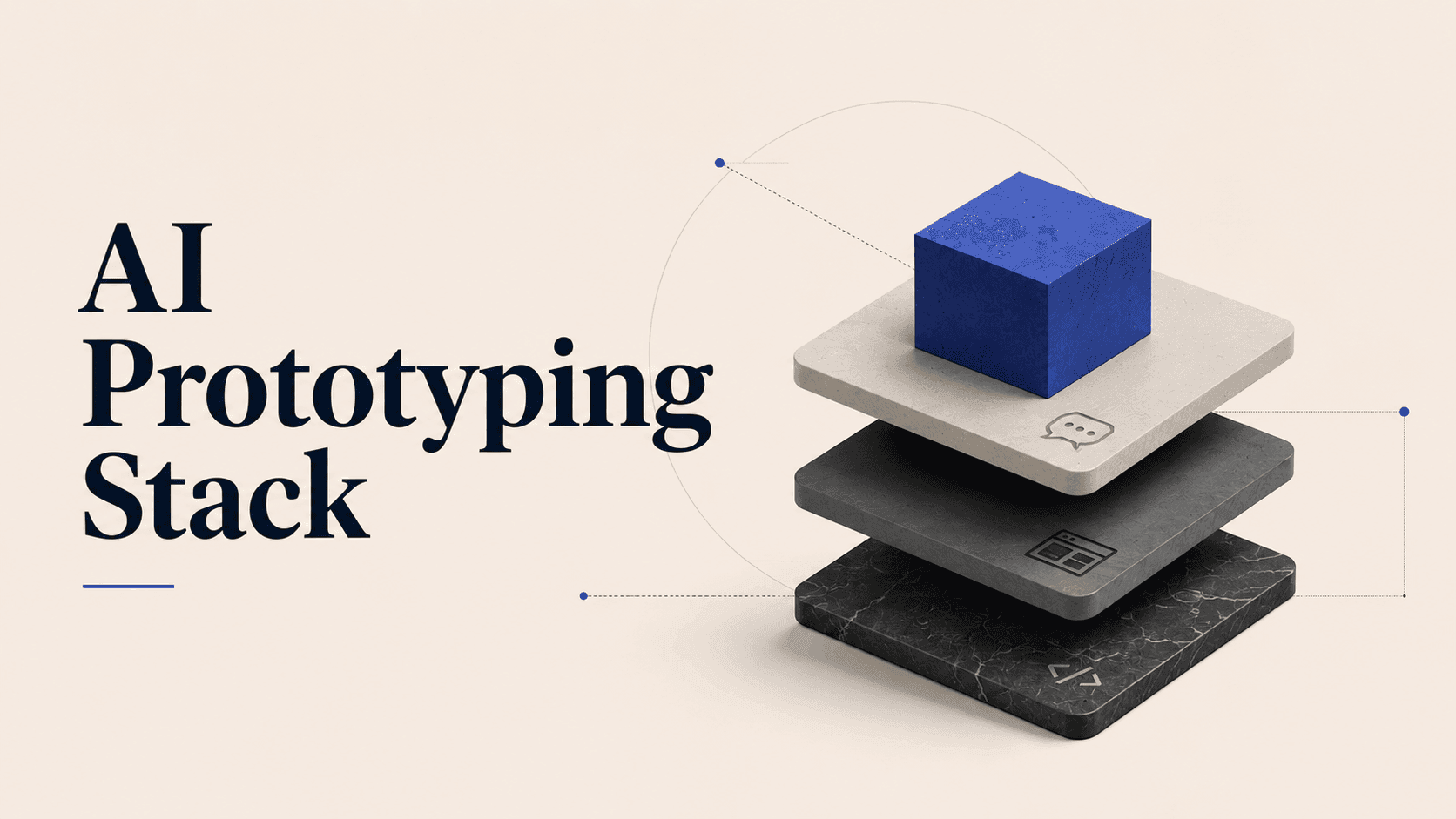
I get asked at least once a week what AI tools I use to ship faster. The honest answer is short. The unhelpful answer is "it depends on the project". The useful answer is the specific stack below. Four pieces, in order of how much leverage they give me.
What's actually in the stack
The first is a custom GPT trained on the client's brand voice and design tokens. Not a generic copywriting assistant. One that writes in the register the client's team actually uses, and emits design language the engineering team can paste into a token file. Building this on start of an engagement is the single highest-leverage thing I do. It pays back by week two.
The second is research. Perplexity goes first, for the initial market scan: competitor landscape, regulatory context, the boring fact-gathering that used to mean two days of hunting through PDFs and analyst reports. Cited sources, ninety minutes, done. Then Claude or GPT agents for synthesis once the customer interviews are in. Transcripts in. Structured journey maps and JTBD statements out, drafted in the client's actual terminology, with the quotes attached. It cuts what used to be a week of post-interview synthesis into half a day. The output isn't perfect; my job is to fight with it for ninety minutes, not produce it from scratch over five days.
The third is prototyping. Claude Code most days, or Codex other days. The trick isn't picking the tool. It's wiring the tool to the client's design tokens before you start prompting. Without that, you generate React that looks like a Tailwind tutorial. With it, you generate React that looks like the brand.
The fourth piece is the boring one nobody posts about: an AI-aware design system. Component contracts and prop schemas the LLM can reliably emit. This is what separates a prototype the engineering team can pull from a prototype that lives only in a Loom.
I don't talk about AI. I ship with it. The talking is everyone else's job.
What this stack does NOT solve
Half my job is still meetings, stakeholder management, and political work. AI doesn't help with that. It helps with the part of design that's actually design: discovery, prototyping, iteration. The rest is still the rest.
Most of what I see online about AI in design is performative. People posting screenshots of single-prompt outputs and calling it a workflow. That's the demo. The workflow is everything around it: the brand-trained GPT, the agents wired into your research pipeline, the design tokens, the contracts. Boring. Working. Compounds.
Tools change every six months. The shape of the stack doesn't. Discovery, prototype, ship. AI compresses each step. The steps remain.