All work02 / 05

Industrial · Digital Transformation

Cemex

CEMEX, a Fortune 1000 cement producer with 40,000+ people and operations in 50+ countries, opened a Prague office in 2017 to digitise a business that had run on paper, fax, and phone calls. I led the design effort for CEMEX Go, an 8-product suite that shipped to 18 countries in year one. The hero product, Orders, replaced a 30-minute phone call with a 3-minute self-serve flow: place orders, review transaction history, and adjust quantities in real time.

Client
CEMEX (NYSE: CX)
Year
2017
Role
Senior/Lead UX Designer
Duration
7 months
Cemex

Scope

Design Thinking Facilitation
Multi-Product Design Lead
Atomic Design System
Cross-Office Mentorship

Team

I joined CEMEX's new Digital office in Prague as Design Lead. Eight designers across offices, embedded with IBM Design Thinking facilitators and a multi-country product + engineering org. Three lanes from leadership: own the Orders product end to end, mentor the designers running the other seven products, and stand up the design system the whole suite would be built on.
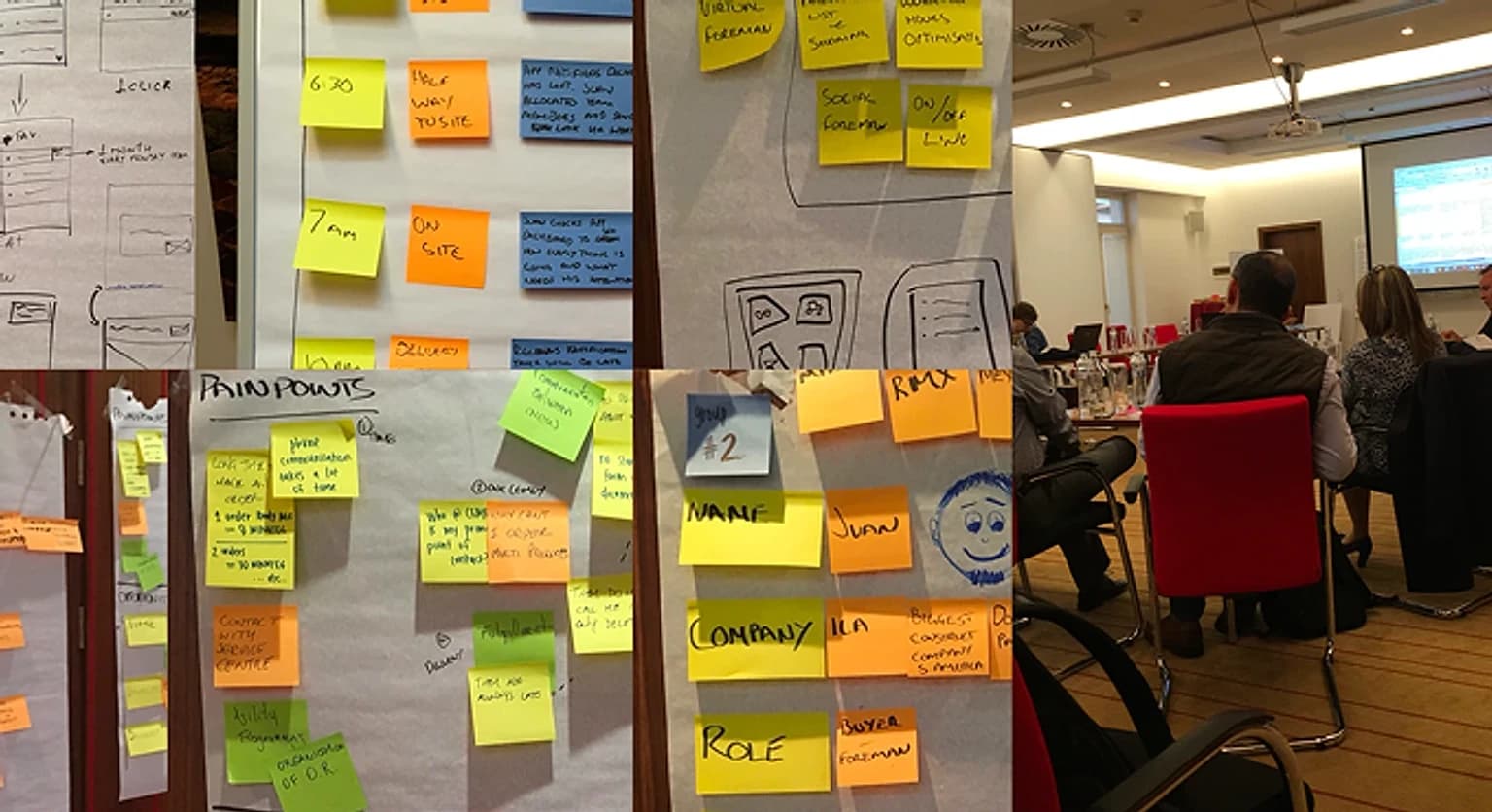
Design Thinking workshop in Prague: sticky-note pain points, stakeholder personas, IBM-facilitated sessions
Design Thinking workshops in Prague, co-facilitated with IBM, with stakeholders representing every market CEMEX served. Generative ideation, user-research synthesis, opportunity mapping. The boards from these sessions drove every design call that followed.

Challenge

CEMEX had been running on paper, fax, and phone calls. Most customer orders started with a 30-minute call to a sales rep. Multiply that across 50+ countries and the operational cost was growing every year. Leadership decided to turn the business digital. The brief from the new Digital office: ship an 8-product suite, in production, across multiple markets, in seven months, from a Prague team being assembled in parallel.

Approach

Week one was a multi-day Design Thinking workshop in Prague, co-facilitated with IBM, with stakeholders representing every market CEMEX served. We opened on a focus group testing an early prototype. That session validated the core assumptions and surfaced the country-specific adaptations the product would need to flex into. From there we ran generative ideation, user-research synthesis, and opportunity mapping. Pain points sorted into universal versus local; features sorted by impact across markets versus depth in any one. Every design call after that workshop traced back to those maps. The Orders product had its own discipline: rapid analog rounds first. Paper prototypes, whiteboard sketches, deliberate low-fidelity so the team could throw work away without ego. Only after several rounds of paper did anything land in Principle or InVision, and even then the high-fidelity work focused on micro-interactions and transitions: the bits that would make the 3-minute flow feel effortless.
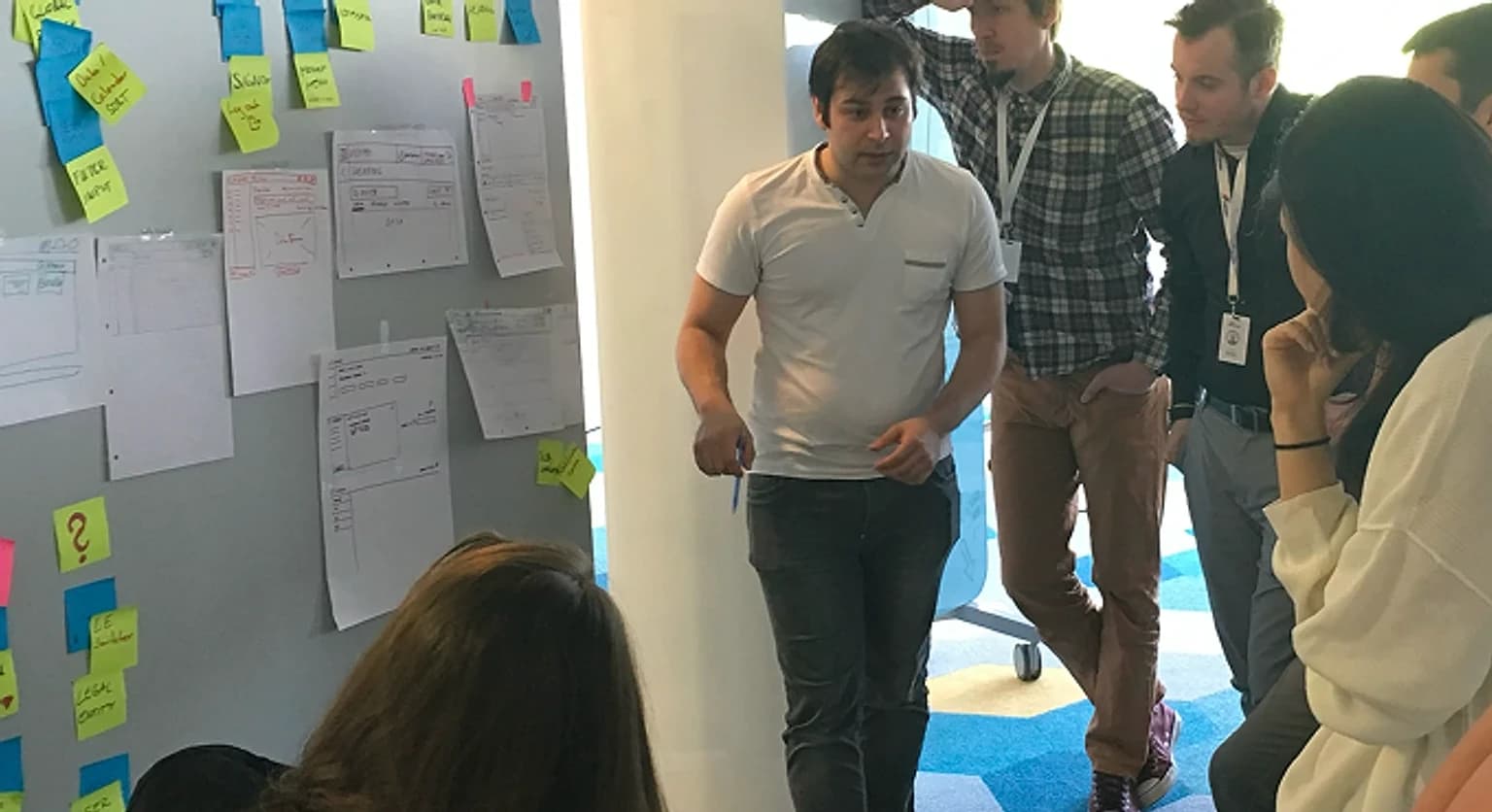
Design critique session in the Prague office, post-its and printed flows pinned to the wall
Critique on the Orders product. Paper prototypes and whiteboard sketches stayed low-fidelity so the team could throw work away without ego. Only after several analog rounds did anything land in Principle or InVision.

Process

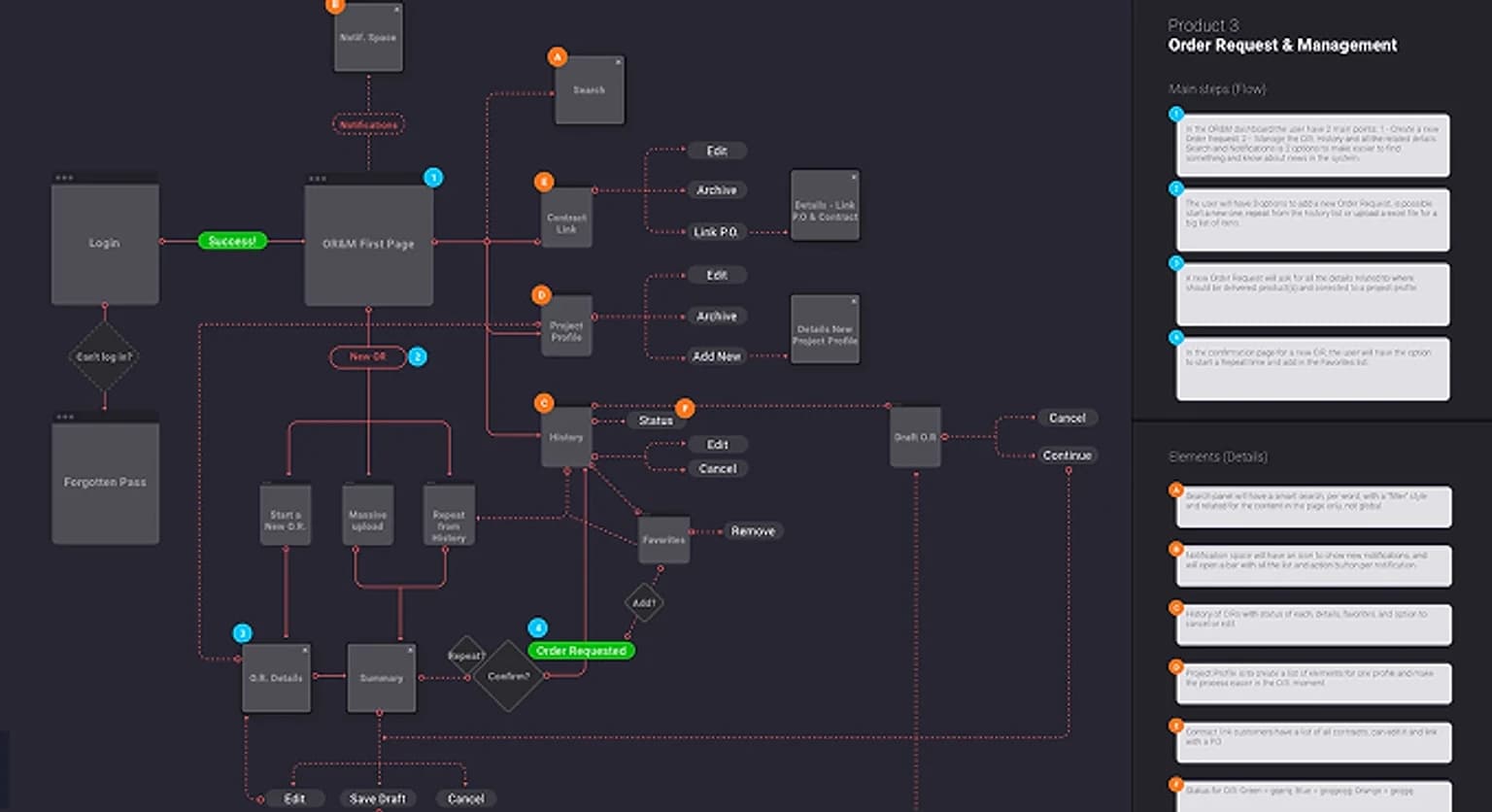
With the Orders flow locked, I mapped the full user-flow across all eight products so engineering could see the ecosystem architecture at a glance and the individual products in detail. Then I mentored the designers running the other seven products to replicate the same mapping exercise on their domain. The design layer itself was incoherent. Every designer had their own styles and patterns. I presented the case for a shared design system to leadership and got buy-in to spearhead it. Built it in Sketch on an Atomic Design structure, governed it through critique sessions with all eight designers so the component decisions landed by collective consensus, not by mandate. I also led the team's migration from Illustrator to Sketch and mentored the IBM designers through the new tooling.
End-to-end user flow map for the Orders product, with login, main steps, and element details
User flow for the Orders product, mapped end to end so engineering could see the ecosystem at a glance and the individual product in detail. The same mapping exercise then ran across the other seven products in the suite.

Outcome

CEMEX Go launched in November 2017 in the United States and Mexico as an 8-product suite that streamlined transactions, cut administrative overhead, and freed customers to focus on the strategic side of their work instead of operational logistics. The platform then rolled out progressively across CEMEX's markets through 2018, with worldwide deployment complete by May 2019. Year one: 18 countries, 20,000+ customers (about 60% of CEMEX's recurring customer base), and 20% of CEMEX's worldwide sales running through the platform. The cement-and-concrete industry isn't where you expect the digital-transformation playbook to ship first, but CEMEX shipped. The platform also seeded the data infrastructure for predictive analytics, shifting the customer relationship from reactive service to consultative support.
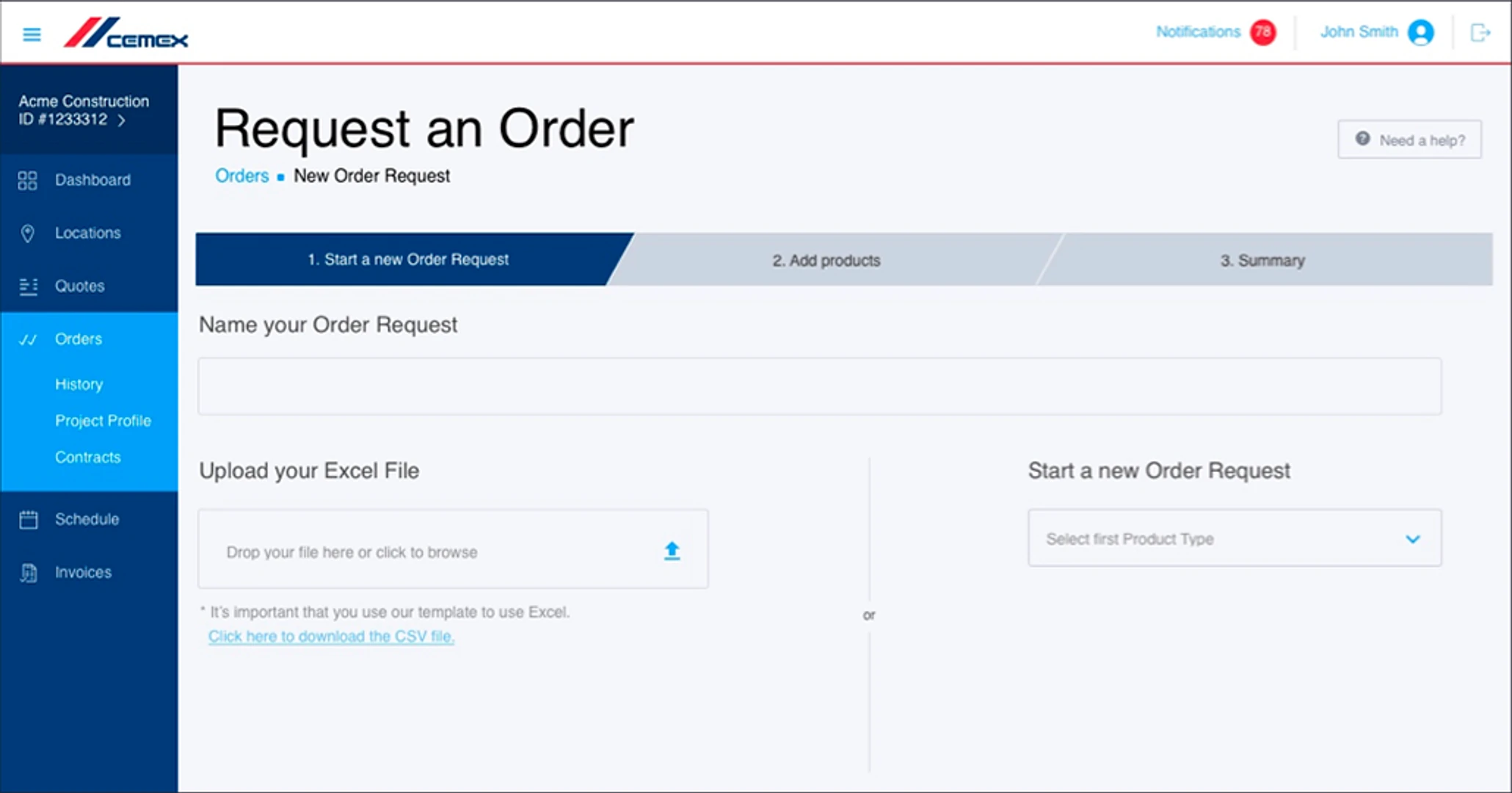
Shipped CEMEX Go interface: Request an Order screen with Excel upload and product selection
What shipped. Request an Order in CEMEX Go: name the order, upload an Excel file or pick from the catalog, walk through three short steps to summary. The 30-minute phone call became a 3-minute self-serve flow.
0120,000+Customers in year one across 18 countries
0220%Of CEMEX's worldwide sales in year one
0330 → 3Minutes per order, phone-call to self-serve
048Products shipped on one design system
Next project